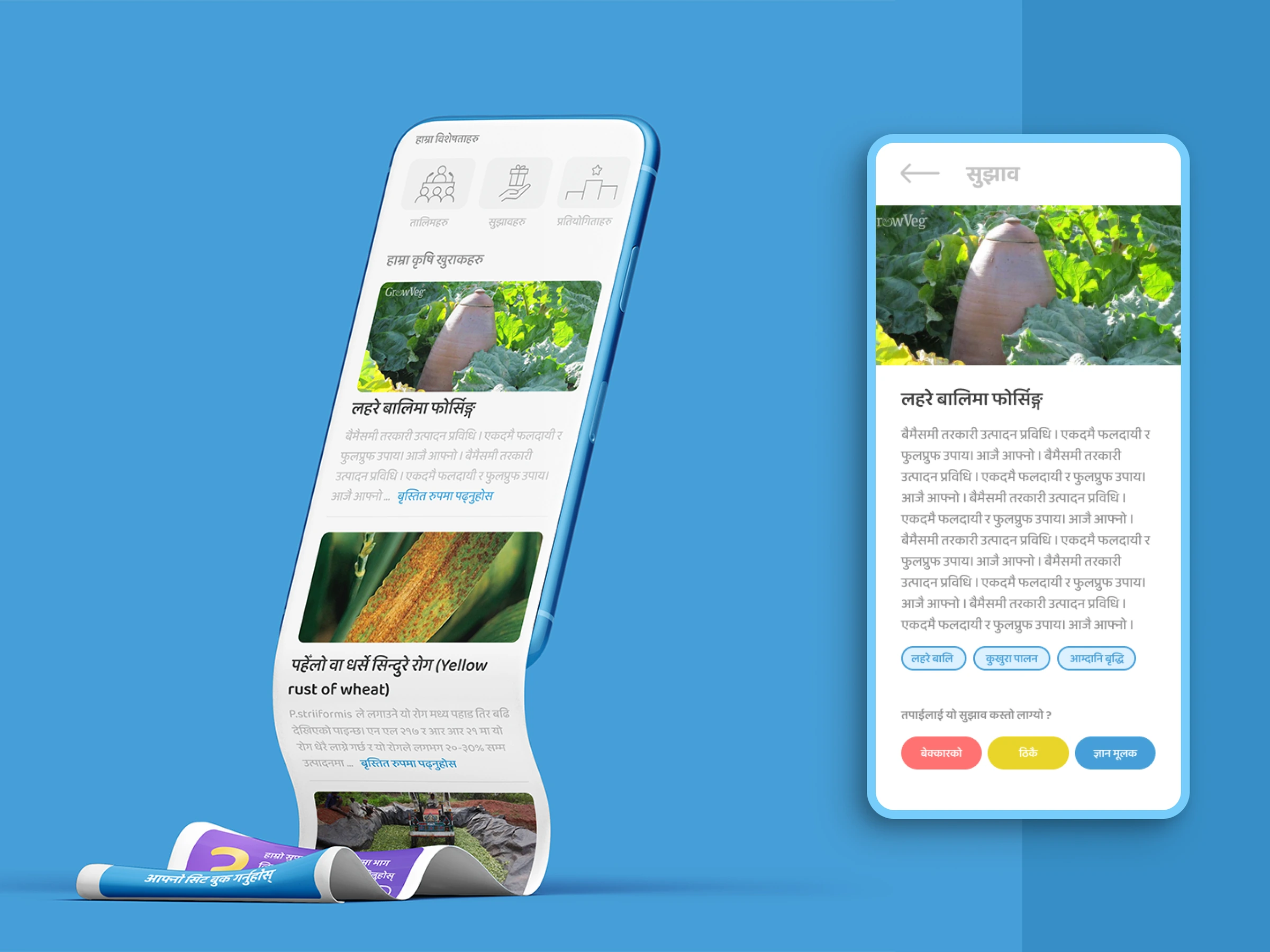
Super Krishak

From advice that farmers might ignore to learning that they come back to weekly

My Role
Lead Designer, UI/UX
Duration
6+ months (research, prototyping, development, observations)
Focus
Gamification · Field Research · Mobile App Design · Content System · Feature Planning
  • 10,000+

    farmers onboarded

  • 1,200+

    active farmers every week

  • Measurable

    quizzes that showed whether farmers retained information

Knowledge, to be delivered and measured

The brief had three parts: teach farmers, keep them engaged, and know whether the training was applied.

Gham Power works with small-holder farmers in rural Nepal. Its agri-experts had valuable advice, but no efficient way to get it to farmers at scale, and no way to tell whether it landed. The app also had to speak the farmers’ language, literally.
Into the fields

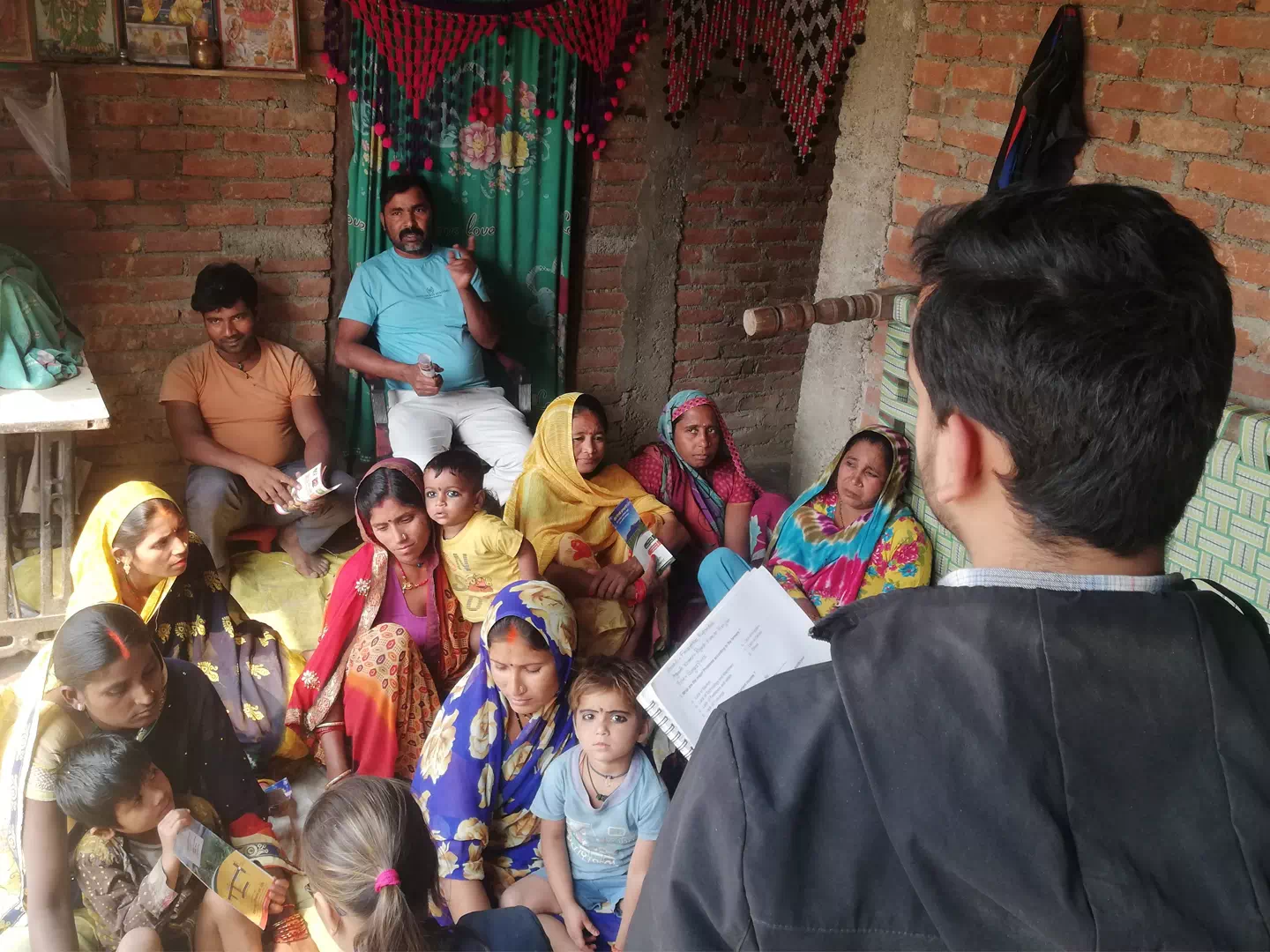
An agri-expert talking with a group of farmers

Before designing, I looked at what farmers already used and how they lived.

I studied popular farming apps in Nepal, visited farmers on site, and worked closely with Gham Power’s two agri-experts. The experts knew the content. The farmers showed me how and when they would need it.

Farmers think in seasons

Farmers didn’t need to know everything. They needed to know what mattered now.

The turning point wasn’t about the interface. It was about what kind of information to give.

Farmers expected seasonal information: what to do now, for the crop that’s in the ground. That reshaped the content plan. Instead of a general library, the lessons and the agri-feed followed the farming calendar, so that timely, local-language advice reached farmers without them having to search for it.

Learning that keeps score

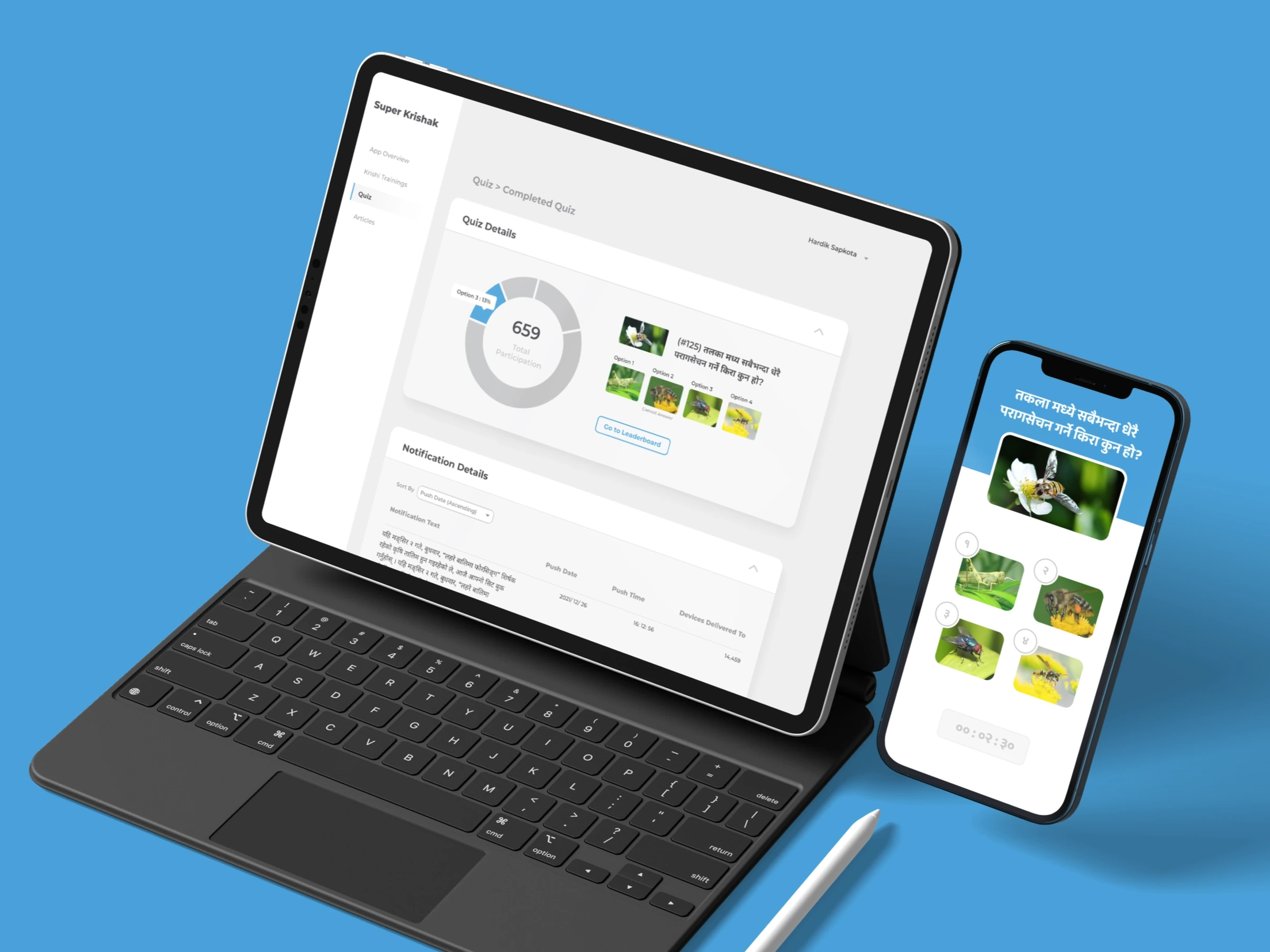
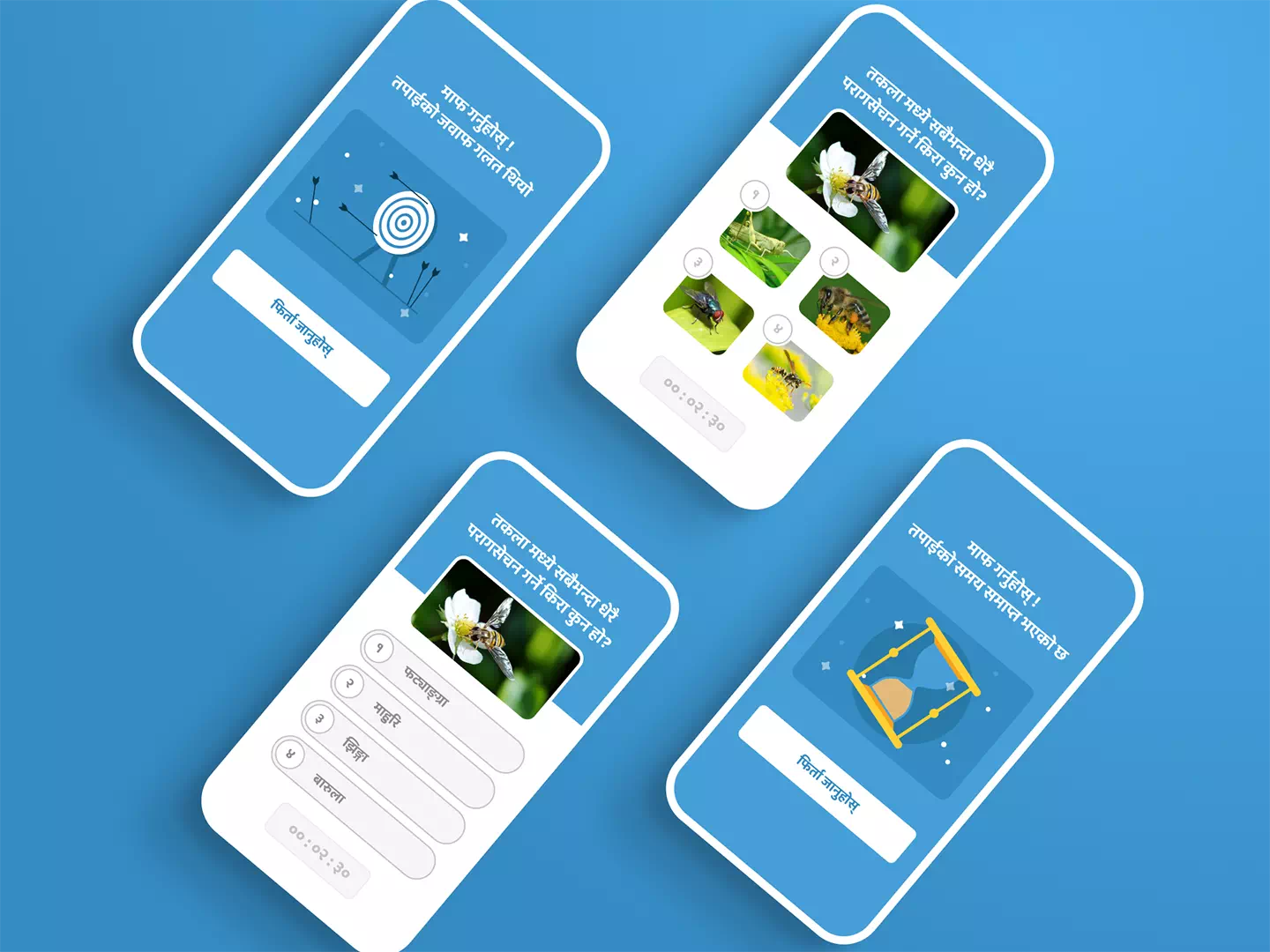
Weekly quiz screens on four phones

Weekly quizzes that matched weekly lessons, so that engagement and learning could be measured in one step.

Rewards and clear learning goals gave farmers a reason to keep coming back. The quizzes also solved the tracking part of the brief. We knew the content was new to the farmers from the feedback we received during the lessons, and the quizzes showed that they were learning and retaining it.

Leaderboards lost. Real rewards won.

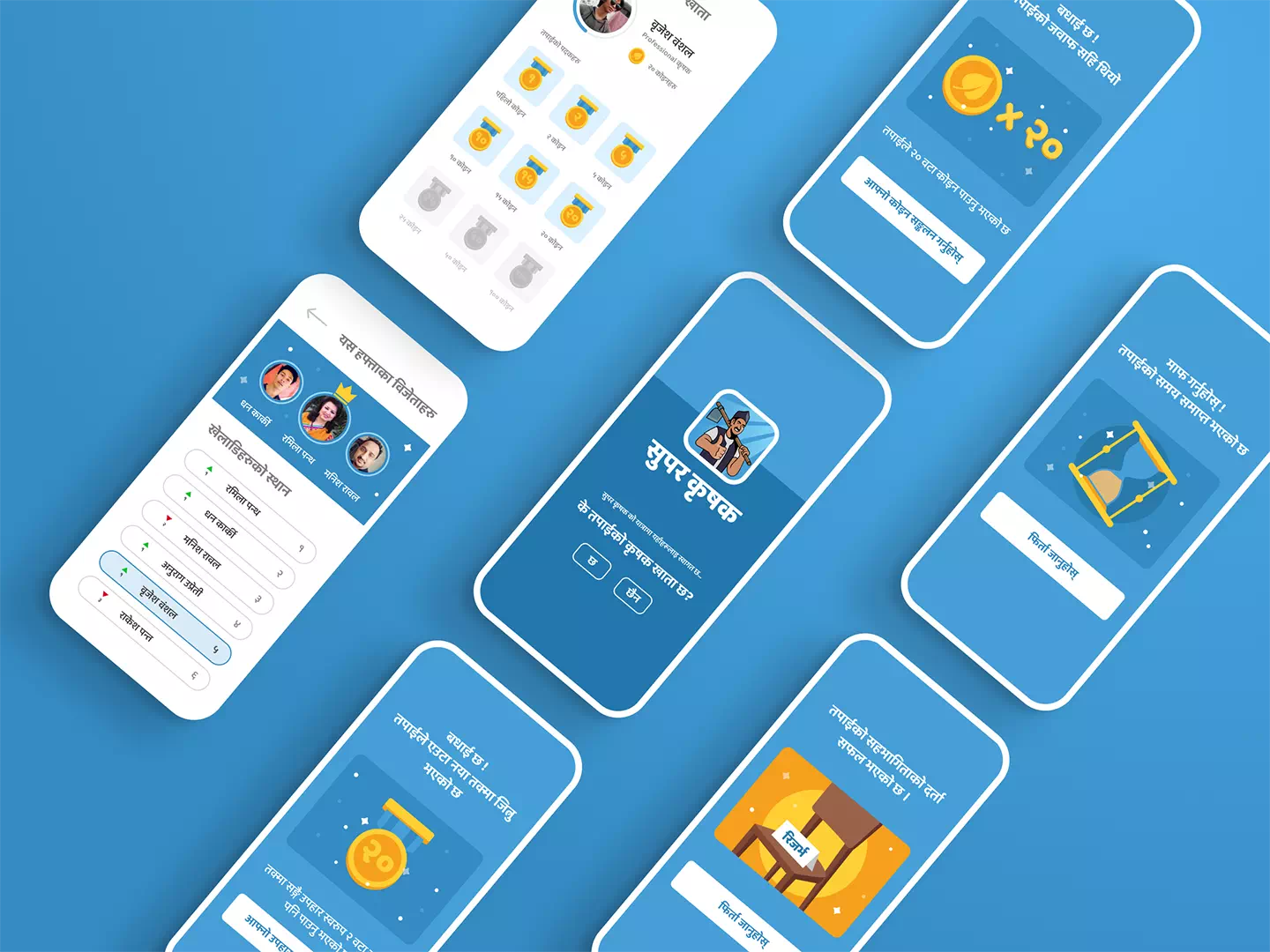
Illustrated reward screens from the app

Competition didn’t motivate these farmers. Points worth something outside the app did.

The leaderboard, a standard gamification lever, didn’t work. What did work was tying points and medals to real-world incentives. The most valuable reward was attention from an expert. Farmers with high points received custom advice for their own farm, which is what they came for in the first place.

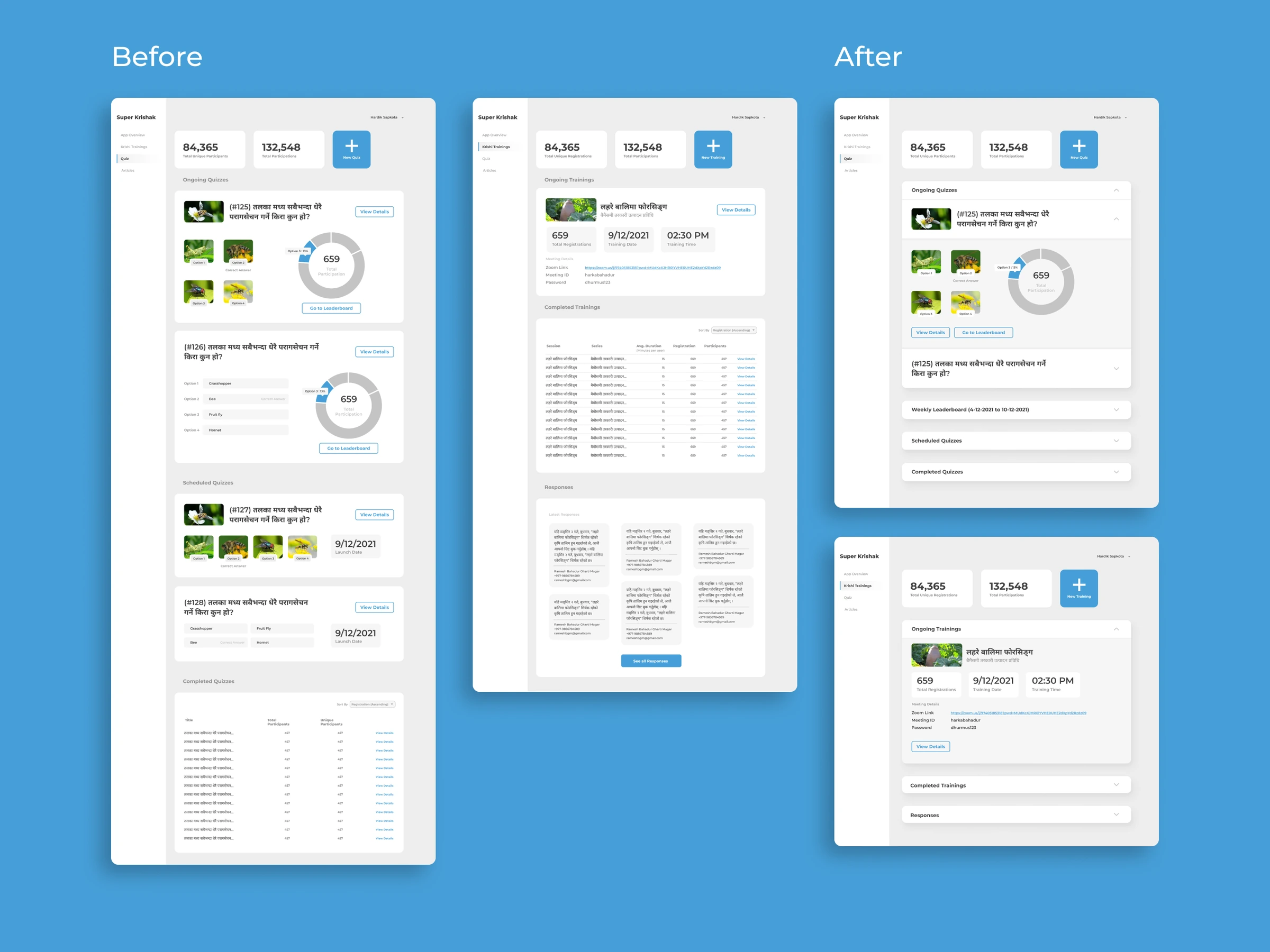
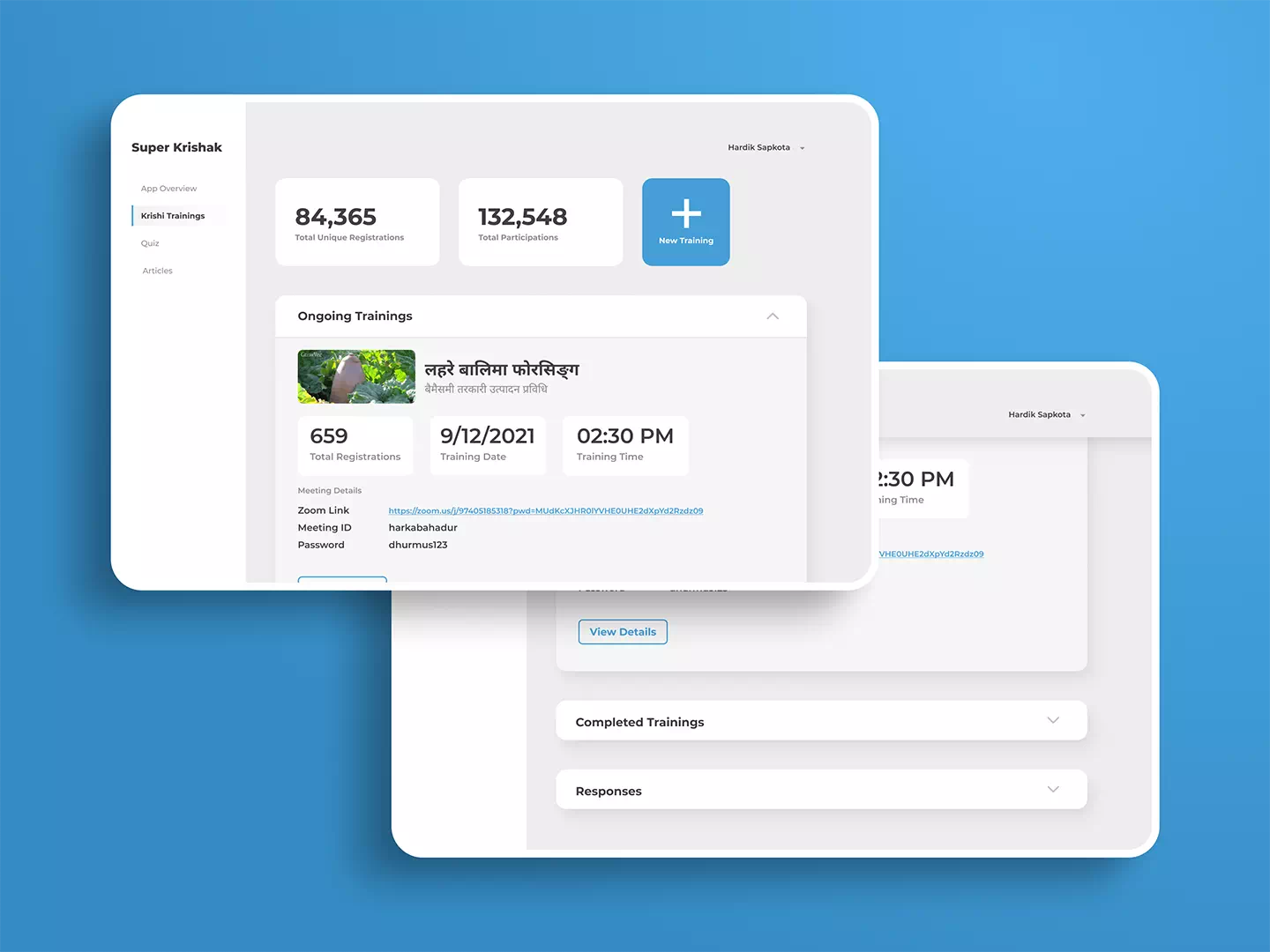
One control center

The agri-experts needed to run the platform without a developer.

I designed a single back-end combining content management, platform controls and a CRM. The experts could publish seasonal lessons, manage the feed and follow up with high-scoring farmers from one place.

10,000 farmers so far, 1,200 a week

The Super Krishak listing on Google Play showing 10K+ downloads

More than 10,000 farmers have been onboarded so far, and more than 1,200 were active every week.

These figures come from platform data. The quizzes had a high success rate on content that was new to farmers; the exact pass rates weren’t kept. The project is still running after I left the company.

On attribution: reach and content quality also depended on the agri-experts and on how Gham Power introduced the app to farmers. I credit the design directly for the learning format, the incentive model and the system that made learning measurable.

Principles are a starting point

This was my first time gamifying content. It turns out gamification principles are a starting point, not a recipe. The leaderboard, a textbook lever, didn’t help much, but tangible rewards and personal advice did. Small details mattered too, and micro-interactions did more for the experience than I expected. Next time I would arrange to test each motivator with the people it’s meant for before building it in.